You probably think of an eye exam as a simple vision test—a way to find out if you need glasses or new contacts. But an eye check-up can actually do so much more. A closer look at your eyes can reveal a lot about your overall health, sometimes spotting signs of conditions like diabetes and other hidden diseases before you notice other symptoms.
This early look is incredibly helpful for your well-being. While an eye doctor cannot give you an official diabetes diagnosis, they can often be the first to spot the warning signs inside your eyes. This gives you a valuable head start in managing your health with your primary care doctor.
Your Eye Doctor’s Role in Your Overall Health
Think of a comprehensive adult eye exam as a key part of your total health. Eye doctors can see things that you can’t, like changes to the blood vessels and nerves at the back of your eye. These tiny structures can indicate early signs of health issues that affect your whole body.
If your eye doctor notices anything unusual that might be linked to a condition like diabetes, they will recommend that you follow up with your family physician. This teamwork helps you get the comprehensive care you need, which is why regular exams are recommended to stay healthy.
How Diabetes Can Affect Your Eyes
When blood sugar levels stay high, it can harm the tiny blood vessels in the retina—the light-sensitive layer at the back of your eye. This damage is called diabetic retinopathy, and it can affect your vision over time, making an annual diabetic eye exam a key part of managing the condition. Often, you won’t notice any changes in the early stages, which is why regular exams are so important.
What an Eye Doctor Looks For
During an exam, the doctor can look for specific clues that may point to diabetes. These signs are often invisible without special tools. The team looks for:
- Leaky or swollen blood vessels
- Small changes to the retina
- Cloudiness in the lens of your eye
- Any signs of damage to the optic nerve

Symptoms You Might Notice
As the condition progresses, you may experience changes in your vision. If you notice any of the following, it’s a good idea to schedule an appointment. Symptoms can include:
- Vision that is blurry or seems to change from day to day
- Seeing dark spots or “floaters” drift across your vision
- Trouble seeing clearly at night
- Colors that appear faded or washed out
A Comprehensive Exam vs. a Simple Vision Check
A standard vision screening is very different from a comprehensive eye exam. While a quick screening can check how well you see from a distance, the dilated exam provides a much more detailed look at the health of your inner eye structures.
The Dilated Exam Process
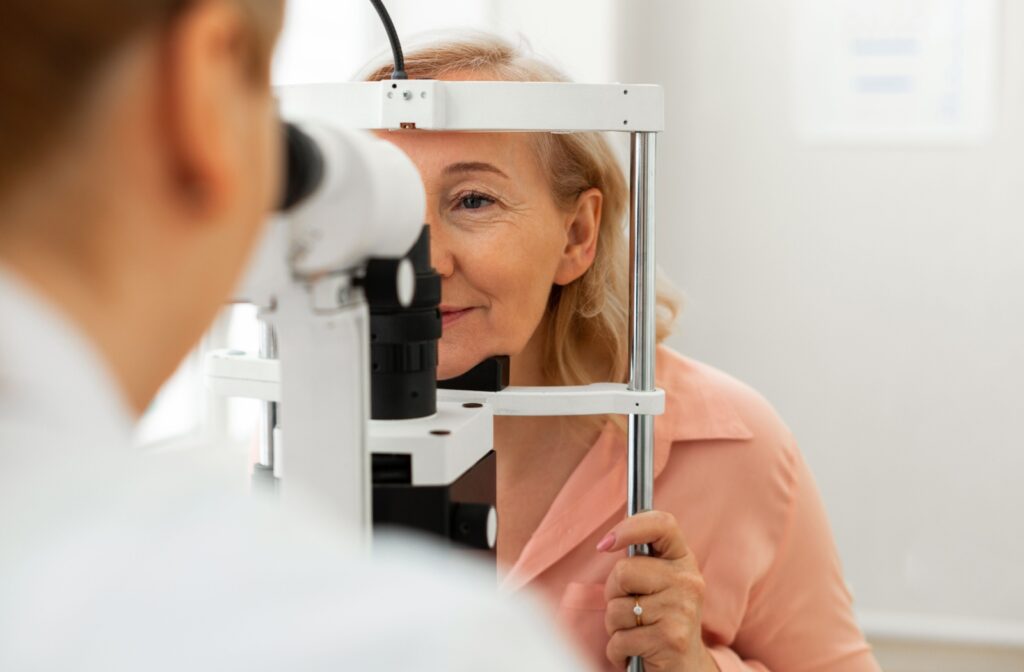
For this exam, the doctor uses special eye drops to gently widen your pupils. This creates a clear, wide-open view of the retina and optic nerve. It’s like opening a door to get a better look inside a room.
Your eye doctor may use magnifying instruments to check for subtle changes that may indicate diabetes or other health issues. This thorough look is part of proactive healthcare for you and your family.
An Eye Exam for Prediabetes Clues
Sometimes, early changes in the blood vessels of your retina can be visible even in the prediabetes stage. Early detection of these signs is a significant advantage, as it’s important to address issues before symptoms appear. It gives you a chance to discuss lifestyle changes with your doctor to help you feel your best.
When you take action early, you can help prevent or delay health complications, especially since millions are affected by diabetic eye disease. An eye exam can be an early step in that journey.
Other Health Issues an Eye Exam Can Reveal
Your eyes really are a window to your health. Beyond signs of diabetes, a thorough eye exam can reveal clues about other conditions you might not be aware of. Some of these include:
- High blood pressure
- High cholesterol
- Certain autoimmune conditions
- Thyroid disease
Regular vision care for your family is a simple step that supports their overall wellness. At Restore Vision Center, the team is here to help you feel comfortable and informed. If it’s been a while since your last check-up, schedule an appointment today to protect your vision and your health.